
Water heater failures are one of the most expensive water losses in newer Las Vegas Valley homes. Builders in Anthem, Seven Hills, Inspirada, Cadence, Mountain's Edge, and large parts of Summerlin commonly install water heaters in second floor closets above living space. When a tank lets go on the second floor, gravity does the rest: 40 to 80 gallons through ceilings into bedrooms, living rooms, and finished kitchens below, often during the workday when nobody is home to shut anything off.
This guide covers why Vegas water heaters fail earlier than rated, where the damage hits, and the spring weekend checklist that prevents most losses.
Why Vegas water heaters fail early
Las Vegas tap water carries 16 to 18 grains per gallon of hardness, among the highest in any major US metro. That mineral load builds up inside the tank as scale, insulates the heating element from the water, and accelerates corrosion. Manufacturer rated 12 year tanks routinely fail at 8 or 9 years here. Tankless units last longer but require annual descaling that most homeowners skip.
Where the damage hits
Builders in newer Anthem, Seven Hills, Inspirada, Cadence, Mountain's Edge, and Summerlin often install water heaters in second floor closets above living space. When a tank lets go on the second floor, it dumps 40 to 80 gallons through ceilings into bedrooms, living rooms, and finished kitchens below. Closet drain pans and discharge lines, when they exist, are often undersized or improperly plumbed.
Five things to check this weekend
- Inspect the bottom of the tank for rust streaks or moisture; any sign of weeping means the tank is on borrowed time.
- Confirm there is a drain pan under the heater connected to a working drain line outside the wall.
- Test the temperature and pressure relief (T&P) valve by lifting the handle briefly; water should rush out and stop.
- Confirm a working main water shutoff valve and label it for every adult in the household.
- Consider a leak detection device with auto shutoff (Flo, LeakSmart, Moen Flo) at the main; these have prevented many losses for under $700 installed.
What to do in the first ten minutes of a failure
- Shut the cold water supply to the tank (the valve directly above it).
- If that valve is stuck, shut the main water supply to the house.
- Turn off power to the tank (electric breaker) or close the gas valve.
- Photograph everything before moving anything.
- Call your carrier and a 24/7 restoration company at the same time.
Restoration timeline
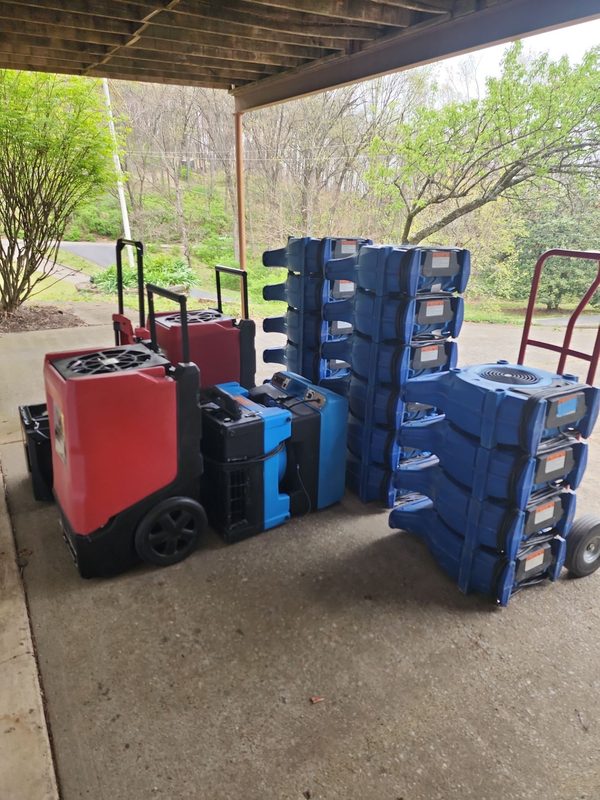
A typical 50 gallon failure caught within the hour and addressed by a professional crew dries in three to five days, with rebuild adding one to three weeks. A failure that ran overnight before discovery commonly doubles those timelines and forces removal of ceiling drywall, hardwood flooring, and cabinetry that early discovery would have saved.
Why automatic shutoff devices are worth it in Vegas
A whole house leak detection device (Flo by Moen, LeakSmart, Phyn, and similar) installs at the main water line and monitors flow patterns. When it detects an unusual continuous flow (like a burst tank or supply line), it automatically shuts the main valve in seconds. For two story Vegas homes with second floor water heaters, the math almost always favors installation. We have responded to losses where the device prevented what would have been a $40,000 claim by shutting off the main within 30 seconds of failure.
What proper sequencing looks like after a failure
After the water is shut off and power or gas is killed, the right sequence is: extraction, plumbing replacement, structural drying, microbial treatment, then rebuild. Doing rebuild before the framing and drywall are dry leads to mold remediation calls weeks later. A typical second floor failure caught within an hour dries in three to five days; a failure that ran overnight commonly doubles those numbers and forces removal of ceiling drywall, hardwood flooring, and cabinetry.
Need professional help with this in Las Vegas or Clark County? Our IICRC-certified crews respond 24/7.
Call (702) 605-2526