
Wildfire smoke is now an annual reality in the Las Vegas Valley. Whether the source is the Spring Mountains, the Sheep Range, the southern Sierra, or major fires across California, Utah, and Arizona, smoke drifts in, settles, and stays until the next strong wind shift. AirNow.gov and the Clark County Department of Air Quality regularly post unhealthy and very unhealthy AQI advisories during major fire seasons.
This guide covers what is actually happening to your indoor air during a smoke event, what to do during the event to protect your family, and when professional smoke remediation is justified after the air clears outside.
Why valley air gets so bad so fast
The Las Vegas Valley sits inside a ring of mountains that traps air. When wildfire smoke from the Spring Mountains, the Sheep Range, or distant California and Utah fires drifts in, it tends to settle and stay until the next strong wind shift. Clark County DAQ regularly issues unhealthy and very unhealthy AQI advisories during major fire seasons.
How smoke gets inside a sealed home
Even a tightly built home is not airtight. Smoke enters through HVAC fresh air intakes, exhaust fan dampers, recessed lights, plumbing penetrations, dryer vents, attic vents, and the gap under every exterior door. By the second day of a heavy smoke event, indoor PM2.5 in most valley homes is well above safe levels unless you have actively filtered the air.
What to do during the event
- Run your HVAC system fan continuously with a MERV 13 (or higher) filter. Replace it weekly during smoke events.
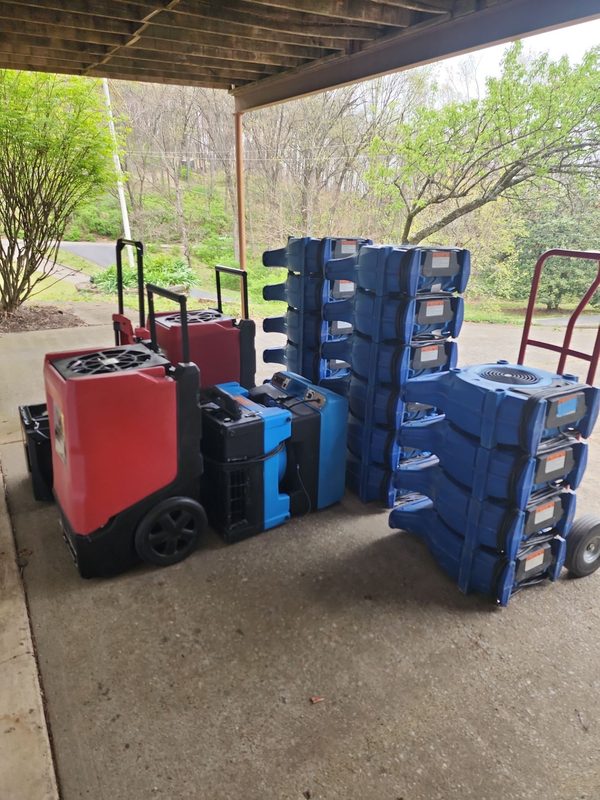
- Add one or two HEPA portable air cleaners sized to your largest occupied rooms.
- Close fresh air intakes and economizer dampers temporarily.
- Skip running the dryer, range hood, and bathroom exhausts unless necessary; each pulls smoke in to replace exhausted air.
- Check on elderly neighbors, infants, and anyone with asthma or COPD; the valley sees ER spikes during long events.
When you need professional smoke remediation
A short smoke event handled with HEPA filtration usually leaves no lasting trace. A multi-day event, an event where you ran the HVAC without an upgraded filter, or any event where you can still smell smoke a week after the air clears outside often justifies a professional cleanup. Soot is acidic; it continues to etch glass, metal, and finishes if it is not properly removed.
- HEPA air scrubbing of indoor air
- Wipe down of horizontal surfaces and electronics
- HVAC duct cleaning to stop recirculation
- Soft goods and contents cleaning if odor is in fabrics
- Hydroxyl or thermal fogging for residual odor
Insurance and wildfire smoke
Direct wildfire smoke contamination of a home (without flame contact) is sometimes covered, sometimes not. Coverage often hinges on whether physical damage can be documented (soot deposits, etched windows) versus pure odor. If your home has heavy smoke contamination from a regional wildfire, document immediately, request testing if necessary, and engage a restoration company that has handled smoke claims with your carrier before.
What is actually in wildfire smoke
Wildfire smoke contains PM2.5 particles (fine particulates 2.5 microns or smaller), volatile organic compounds, carbon monoxide, and combustion byproducts. PM2.5 penetrates deep into the lungs and bloodstream. Vulnerable populations (children, elderly, anyone with asthma, COPD, or cardiovascular disease) experience measurable health effects at AQI levels well below the unhealthy threshold.
What professional smoke remediation actually does
Real post-event smoke remediation addresses ductwork, contents, and structural surfaces as separate work packages. HEPA air scrubbing during cleanup, soot specific chemistry on surfaces, HVAC duct cleaning to stop recirculation, contents cleaning for fabrics and electronics, and hydroxyl or thermal fogging for residual molecular odor. Skipping any one of these typically leaves odor that re-emerges in humid weather months later.
Need professional help with this in Las Vegas or Clark County? Our IICRC-certified crews respond 24/7.
Call (702) 605-2526